
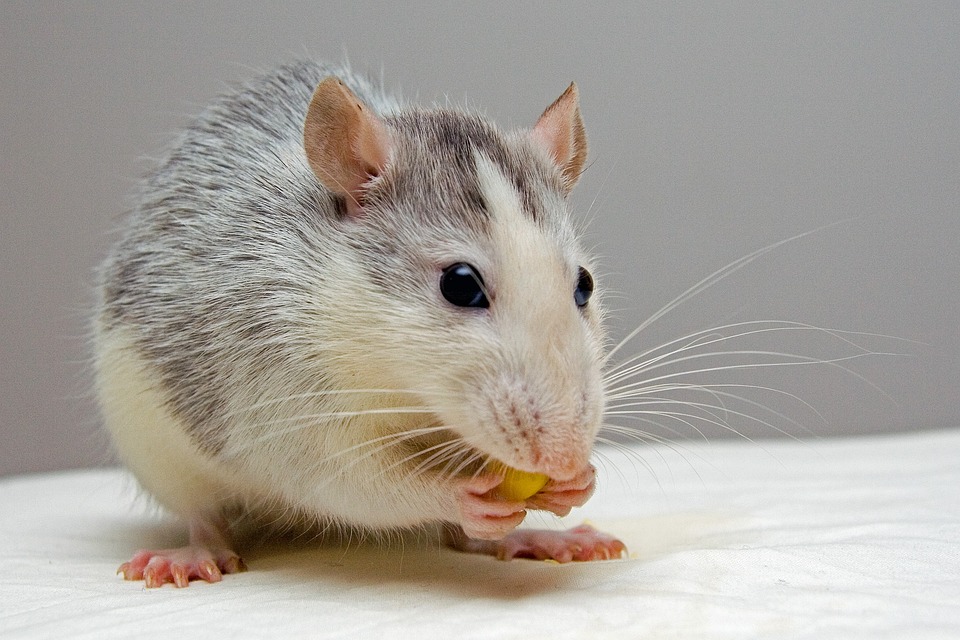

Although the rats and mice are common pests in the UK, their elusive nature means aspects such as their life cycle are shrouded in mystery for most people.
Not knowing details on their breeding habits, behaviour and how long they can live for can be detrimental to your pest control efforts. For example, if you see one mouse one year and another the next, is that the same mouse or must it be a different one? If you see a rat on one part of your property then another one on the other side of your property is that the same rat or even from the same nest? If you leave either of these to themselves, will they simply go away or will the problem get worse?
Knowing how they live can help to answer the above questions, allow you to tailor your efforts to your specific situation and get the most effective results, such as using the correct amount of rodent traps or ensuring you begin your pest control campaign at the right time of year (to sort it out before there is a population explosion).
At The Pest Collective, we supply a range of high-quality rat poisons, traps and Repellers that can provide quick and effective results against an invasion of these unwanted pests.
Rats
Rats are pink when they’re born, have no fur and their eyes closed. They are totally reliant on their parents at this stage. After 2-3 weeks they will start to grow fur and open their eyes, allowing them to start learning the life skills they need to survive and become independent from their mothers.
Rats will reach the age of sexual maturity at around 12 weeks , at which point they will be able to reproduce. They can have a life span of up to 3 years, although most won’t last longer than a year due to the fact they are so targeted by natural predators and humans.
Reproduction Rates
Rats have a gestation period of about 3 weeks, will produce around 6 to 12 babies per litter and can have around 5 litters per year . Once she has given birth, females are able to reproduce very quickly again, sometimes only needing a few days recovery before going back into heat.
Factors affecting how quickly and successfully they breed include the availability of food, water and shelter as well as the health of the rats .
This breeding cycle can exacerbate the already serious problems with even a single rat on your property. The maths suggests that a single breeding female can produce around 60 offspring per year. Most of these babies will be able to have their own babies and even their babies will have their own babies within the same year! Now imagine there are 5 or 6 breeding females in the nest you’re dealing with…
Rentokil have noted that, in theory, a pair of breeding rats could produce almost half a billion descendants over a 3 year lifespan .
Seasons they breed
Rats can breed all year round, however they will be most active during spring and autumn when there is plenty of food and shelter for them. As winter comes in, there may be less food, so they focus their efforts on hunting and scavenging.
However, as global temperatures warm, seasons become more unpredictable and countries increase urbanisation thus the availability of food and shelter these pests in abundance regardless of the season, allowing them to breed all year round.
Social structures & behaviours during their lives
Rats are very social creatures, often living in large groups and having complex social structures. Often, a group will have a dominant male who breeds with multiple females and they can have multiple active nests to give them better access to food sources.
They can spread quickly as rats will pair off and venture into new, unclaimed territory to start new nesting sites. Once a nest is set up, the dominant male and female will start to reproduce at the alarming rate noted above.
Mice
Mice reach sexual maturity slightly quicker than rats, normally being able to reproduce just 2 months after they’re born . Like rats, they are born without any fur, are blind and entirely dependent on their mother for food and protection. Within a couple of weeks they will be able to see and move around, gaining independence from their mothers quickly (usually after about 3 weeks).
Although in the right environments they can have life spans of years, in reality, given they have plenty of natural predators and are targeted by pest control campaigns, the average mouse won’t last longer than 12-18 months , however mice that have set up camp indoors and escaped natural predators and harsh conditions can live longer.
Reproduction Rates
Much like rats, mice have exponential breeding potential. Females will have around 5-10 litters per year of between 5 and 10 babies. Each gestation period lasts roughly 3 weeks and, once born, a mouse is able to get pregnant again almost immediately.
With large litters, short gestation times and the ability to reproduce almost continually, an average mouse will produce about 60 descendants in a single year, which is bad enough without taking into account how many babies those offspring will have of their own..
Seasons they breed
Mice can breed throughout the year, especially if food, water and shelter are readily available (which they probably are if they’ve invaded your property). If they are outside and food is scarce, they can enter a state of quasi hibernation called ‘torpor’ where they won’t breed (and spend most of their time sleeping, occasionally waking up to eat or drink).
As with rats, their ability to reproduce so quickly, all year round, can make their presence become a substantial problem in a short period of time. It’s critical to address them the moment you become aware of an infestation.
Social structures & behaviours during their lives
Mice are quite territorial so won’t readily socialise in large groups. A common social structure will involve one dominant male mouse nesting with a few breeding females. Young male mice are generally driven away from the territory when old enough and will look to set up camp elsewhere, although it’s not impossible for males to share territories.
Problems with rats and mice
- The problems with rats are numerous and we have explored them in detail in previous articles, however some of the key challenges they bring are noted below:
- Risks to Human Health
- Rats carry a variety of diseases that are a direct risk to human health. They can be transmitted without direct contact with the rodents.
- Property Damage
- Rat activity can damage structures of buildings as well as key utilities such as electric wires & plumbing.
- Property prices can also decline when word gets around of rat infestations.
- Personal/Business Impacts
- The presence of rats can cause anxiety and stress to an individual, owing to the risks noted above as well as personal and professional reputational damage.
Conclusion
Both rats and mice have relatively short life spans and will not normally last longer than a year, however this timeframe can be extended if there is plenty of food, water and shelter available.
Regardless, they are prolific breeders and can be responsible for producing thousands of descendants each year. Their quick gestation periods and ability to reach sexual maturity within a few weeks allows them to spend the majority of their lives having offspring.
Given these attributes, it’s important to address the existence of rats and mice on your property at the earliest opportunity. Leaving it just a few weeks can inflate a problem of just 2 rodents to dozens of invaders ready to damage your property and transmit their diseases.
At The Pest Collective, we supply a range of high-quality traps, rat and mouse poisons and Repellers that can eradicate the problem before it has a chance to grow.


